
Aeronautical Courses to Launch Your Engineering Dreams
Aeronautical Courses to Launch Your Engineering Dreams
There’s something undeniably captivating about the roar of an aircraft as it cuts through the sky — the sheer power, the grace, the fusion of metal and mathematics that allows humans to soar. For some, it’s a passing thrill. But for others — perhaps you’re one of them — it’s the beginning of a calling. Aeronautical engineering isn’t just about building airplanes. It’s about solving complex problems in gravity-defying environments, it’s about dreaming in equations and waking up to innovation. If you’re a student with your eyes set on the clouds and your heart rooted in science, then the right aeronautical course could be the launchpad you’ve been searching for.
And no, this isn’t just another standard roadmap filled with generic course listings and dry statistics. This is a deep dive into the world of aeronautical education through the lens of discovery, passion, and the incredible resources offered by platforms like Travel Learning Hub, which are reshaping the way students connect with their dreams.
The Sky Isn’t the Limit — It’s Just the Beginning
Before you get lost in the mechanics of pitch, yaw, and thrust, take a moment to ask yourself why you’re here. What makes aeronautics resonate with you? Maybe it’s the elegance of physics in motion. Or perhaps it’s the childhood memory of staring up at a plane disappearing into a sunset. That curiosity — that inner fire — is what every great engineer starts with. And aeronautical courses are where that fire is honed into expertise.
Gone are the days when engineering education was only about memorizing theories from thick textbooks. Today’s aeronautical engineering courses are immersive, integrative, and intensely hands-on. They blend core mechanical engineering principles with aerospace-specific content. You’ll find yourself mastering topics like fluid dynamics, propulsion systems, flight mechanics, aerodynamics, and structural analysis — not as isolated disciplines, but as parts of a larger symphony of flight.
From Ground School to Orbit: What You’ll Really Learn
There’s a popular misconception that aeronautical engineering is just about aircraft design. In reality, it’s far more nuanced and multi-disciplinary. You’ll study not only the structure of aircraft but also the environments they fly through, the materials they’re built from, and the cutting-edge technologies that keep them airborne.
Think about learning to design an aircraft that can slice through crosswinds without a hitch, or simulate airflow over a new wing shape using computational fluid dynamics software. You’ll understand how to make a jet engine more efficient or how to fine-tune the control surfaces of a drone to make it more agile. Some programs even dive into orbital mechanics, satellite design, and space vehicle development — so the learning doesn’t stop at Earth’s edge.
One of the most exciting developments in recent years is the integration of emerging tech into the curriculum. You’ll be exposed to AI-powered simulations, 3D modeling, and digital twin technology, which allows for virtual prototyping before even touching a wind tunnel. Universities and institutes now blend core engineering with data science, embedded systems, and automation — because the aircraft of the future will be as much about code as they are about carbon composites.
The Power of Practical Experience: Beyond the Books
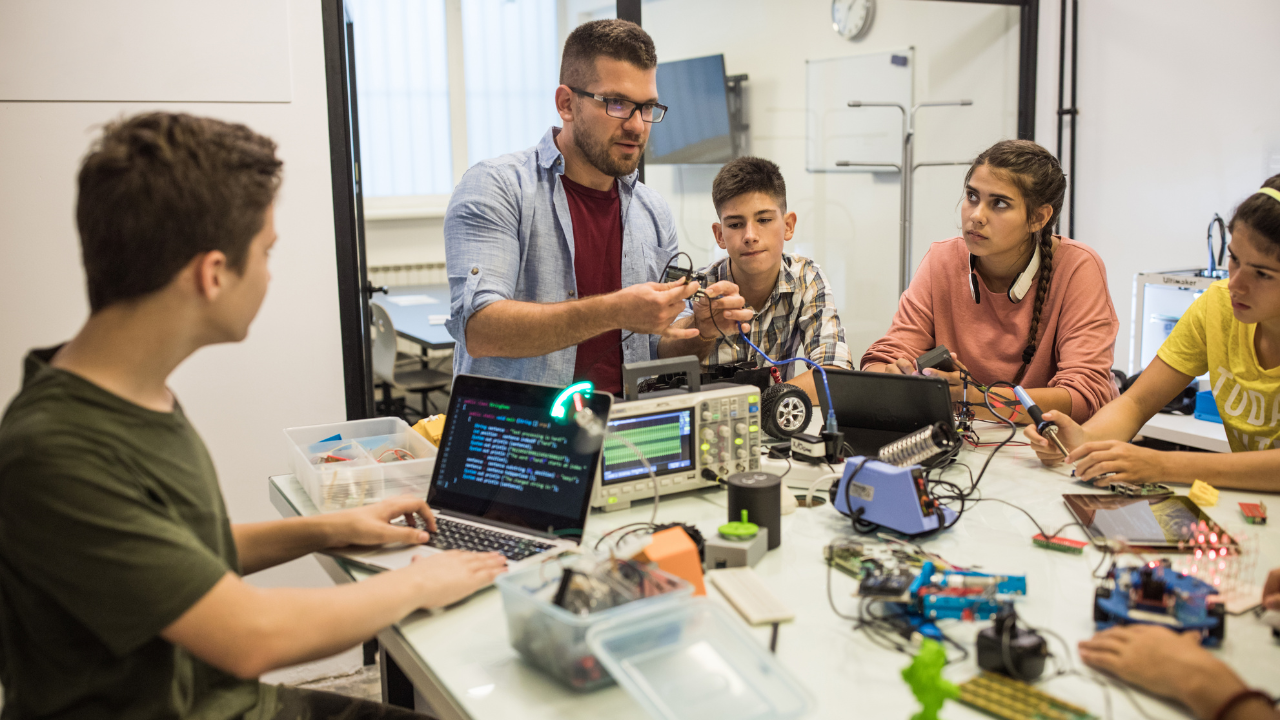
The magic of aeronautical education lies in its fusion of theory and practice. Labs and workshops are no longer confined to benchwork; they’re dynamic ecosystems where students get to construct, test, break, and rebuild. Whether it’s building UAVs (unmanned aerial vehicles) for competitions or testing control systems on flight simulators, the hands-on nature of aeronautical courses is what sets them apart.
Internships play a massive role too. Companies like HAL (Hindustan Aeronautics Limited), DRDO, ISRO, and Airbus regularly take in interns from leading institutions, giving them a glimpse into real-world aerospace operations. You could find yourself assisting in the testing phase of a helicopter rotor or evaluating the thrust-to-weight ratio of a rocket motor. These experiences not only sharpen your technical skills but also give you the chance to work in multidisciplinary teams — a crucial trait in the aerospace industry.
Moreover, many institutes have collaborative projects with the industry, where students work under the mentorship of senior engineers on live challenges. Imagine contributing to an avionics redesign or working on a propulsion system prototype — while still in college. That’s the sort of edge that today’s top aeronautical courses offer.
Career Pathways: Where Your Wings Can Take You
So, you’ve completed an aeronautical course. What’s next? Truthfully, your career options are broader than most people realize. While many graduates do join aerospace giants or defense organizations, there’s a rising trend of aeronautical engineers joining startups focused on green aviation, drone technology, space tourism, and even electric air taxis.
You could be part of a team working on Mars rovers at a space agency or managing aircraft maintenance in a commercial airline. Some engineers choose to specialize further in areas like propulsion, materials science, or flight systems, while others jump into interdisciplinary roles, merging aerospace with AI, robotics, or environmental science.
There’s also strong international demand for skilled aeronautical engineers, particularly in countries investing heavily in aerospace R&D — think Germany, the United States, France, and Japan. An aeronautical engineering degree from a reputed institute is your passport to global opportunities.
And then there’s entrepreneurship. Some of the most exciting advances in aerospace are coming from young minds daring to dream big — like building low-cost satellites or creating drones for disaster relief. If innovation drives you, there’s no better playground than the skies.
Why Choosing the Right Institute Matters
While the content of aeronautical engineering is largely standardized, the experience you get depends massively on where you choose to study. The best institutions don’t just teach—they inspire. They challenge. They nurture your curiosity and equip you with tools to chase bold ideas.
Travel Learning Hub stands out in this context. It’s more than a directory — it’s a thoughtfully curated bridge between aspiring engineers and quality education. Whether you’re exploring diploma courses, bachelor’s degrees, or even postgraduate specializations, the platform simplifies your search by aligning your goals with programs that truly fit your vision.
Instead of being overwhelmed by the sheer volume of choices, students can find clarity through detailed course breakdowns, institute overviews, expert reviews, and personalized guidance. This isn’t just about checking admission boxes. It’s about finding a learning environment that resonates with your ambition, your learning style, and your dream.
And what makes Travel Learning Hub particularly student-friendly is its focus on emerging institutes alongside established ones. Often, smaller or newer institutions offer cutting-edge labs, tighter student-to-faculty ratios, or unique industry partnerships. But without platforms like Travel Learning Hub, they might stay under the radar. By leveling the visibility field, this platform empowers students to make informed, strategic choices.

A Word on Passion and Perseverance
Let’s be real for a moment: aeronautical engineering isn’t easy. It demands rigorous study, late nights, and often, failure before success. There will be equations that don’t balance, simulations that don’t behave, and prototypes that don’t fly. But that’s also the beauty of it — it molds you not just as an engineer, but as a thinker, a doer, a problem-solver.
And when your first UAV lifts off the ground, or when a system you designed passes its flight test, there’s a joy that’s hard to put into words. It’s a moment of quiet triumph — because you made something fly. Something that once lived in your imagination now exists, hurtling through the sky.
Those moments? They’re why we do this. Why we endure the math, the metal fatigue calculations, the stress tests. Because when you work in aerospace, every single day brings the possibility of redefining what’s possible.
Suggested Reading: The Best Aviation Institutes in India for 12th Pass Students
Conclusion: Take the First Step Toward the Clouds
Aeronautical engineering is not just a career path; it’s a lifestyle — one driven by precision, passion, and an insatiable hunger to explore beyond boundaries. As a student standing at the threshold of your academic journey, the choices you make today will shape the arc of your future.
Take your time. Explore your interests deeply. Think about what kind of impact you want to create. And when you’re ready to turn that passion into a profession, make sure your educational path is built on solid guidance and insight.
That’s exactly where Travel Learning Hub becomes your trusted co-pilot. With a wealth of information, expert-curated courses, and transparent recommendations, the platform offers students like you an empowering space to make smart decisions. Whether you’re aiming for top engineering institutes in India or specialized aeronautical diplomas abroad, Travel Learning Hub helps you identify programs that align with your goals, values, and potential.
The sky is vast. But your future in aeronautics? It starts with one well-informed decision.

Tags
About The Author